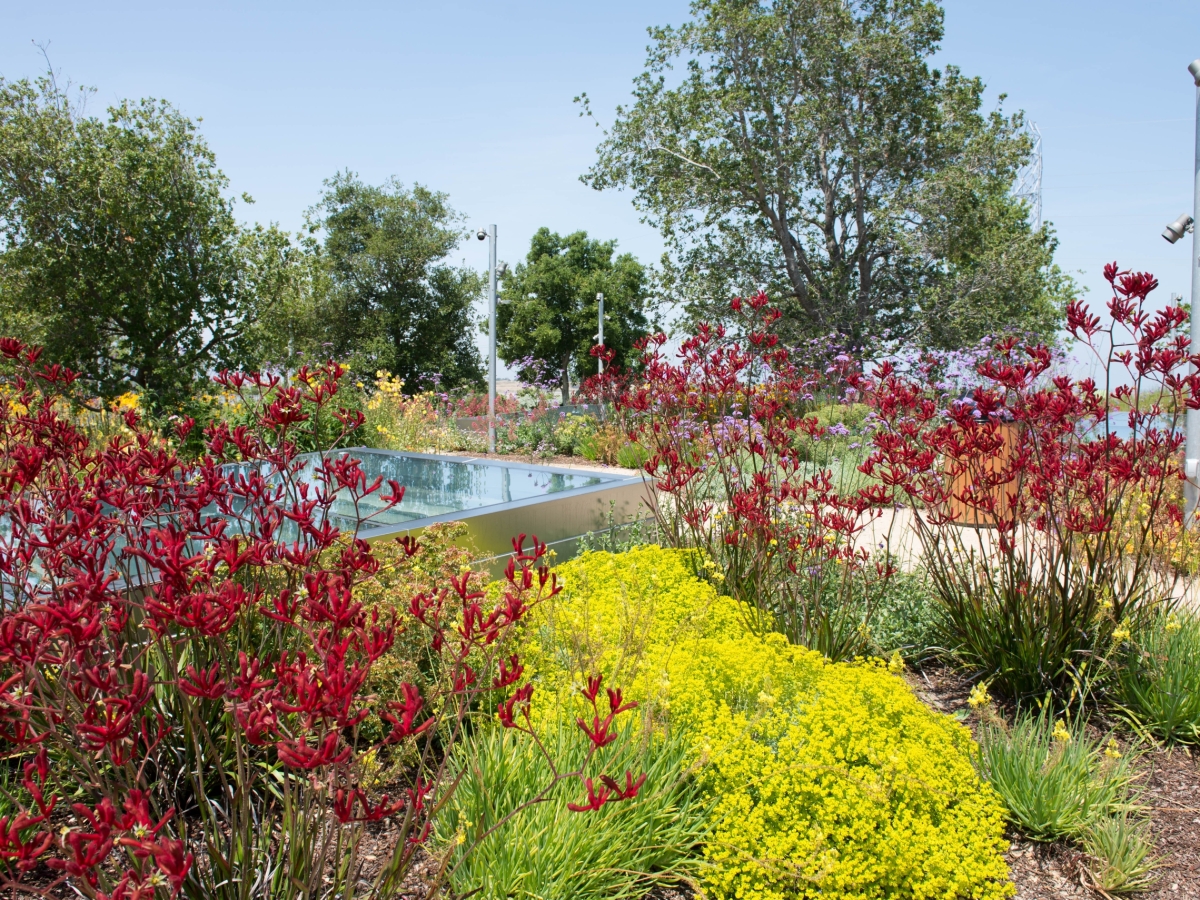
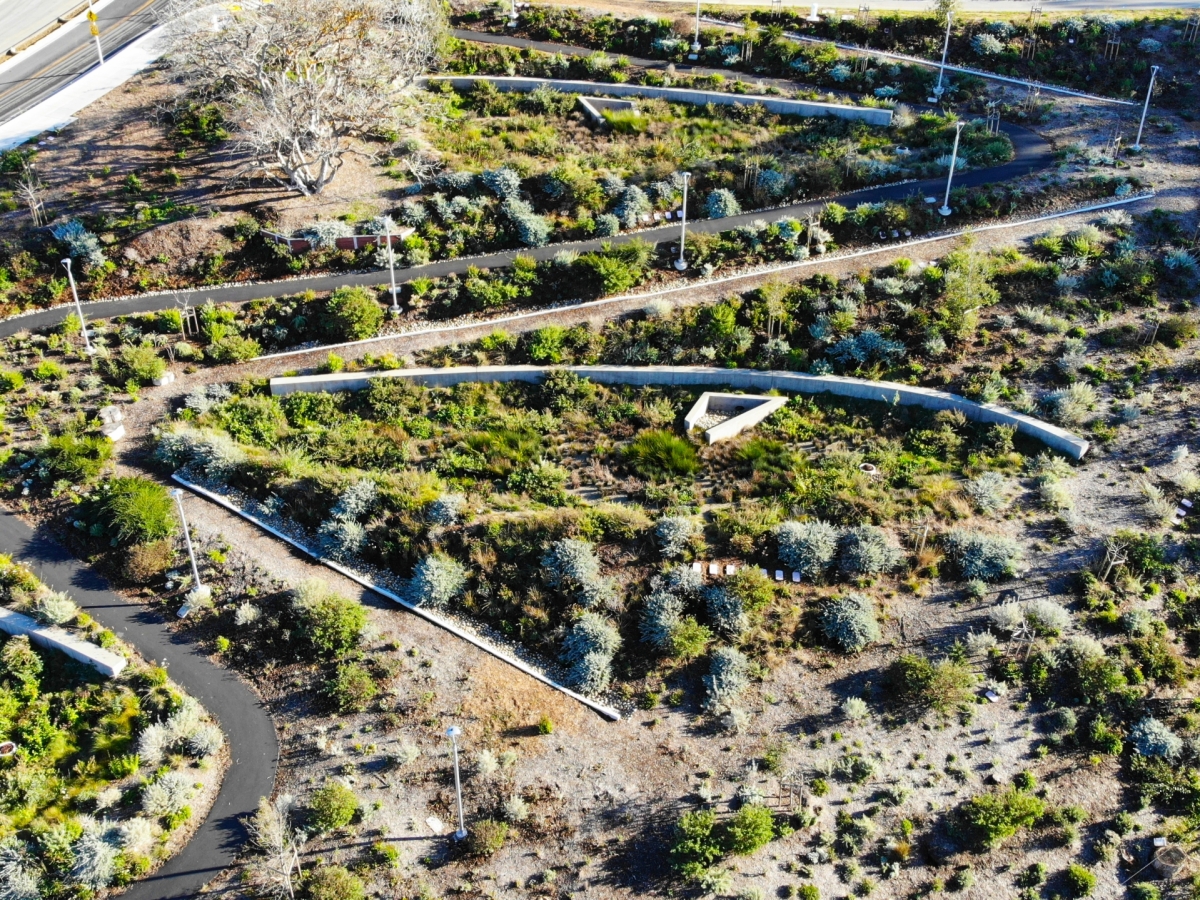
 Meta Campus Rooftop
CMG Landscape Architecture
Menlo Park, CA, USA
Credit: Lisa Daye



.jpg)





Conserving water in landscapes and irrigation systems is crucial for minimizing environmental impacts, particularly amid climate change and increasing water scarcity.
Water-smart conservation reduces energy consumption and greenhouse gas emissions from water extraction, treatment, and delivery, and is vital in arid and aridizing regions. To achieve water-smart landscapes:
Plant Selection and Placement:
- Choose climate-appropriate, native, or locally adapted plants that require minimal supplemental watering.
- Group plants with similar water requirements into hydrozones for targeted irrigation.
Efficient Irrigation Systems:
- Utilize gravity-fed water and wastewater systems to minimize energy consumption.
- Integrate captured stormwater, graywater, and treated blackwater for irrigation.
- Implement subsurface or surface drip irrigation, passive irrigation, and wicking beds to deliver water directly to roots, reducing evaporation.
- Use pressure-regulated sprinklers and soil moisture sensors to optimize soil moisture and minimize water waste.
- Reduce the use of quick-release fertilizers.
Additional Water-Saving Practices:
- Minimize irrigation on steep slopes to prevent erosion.
- Limit fountain use to reduce water loss. When necessary, prioritize recirculating water systems and renewable energy sources.
- Optimize pump sizes and utilize variable frequency drives for energy efficiency.