 Danehy Park ForestSUGiCambridge, MA, USA
Credit: Dino Kužnik

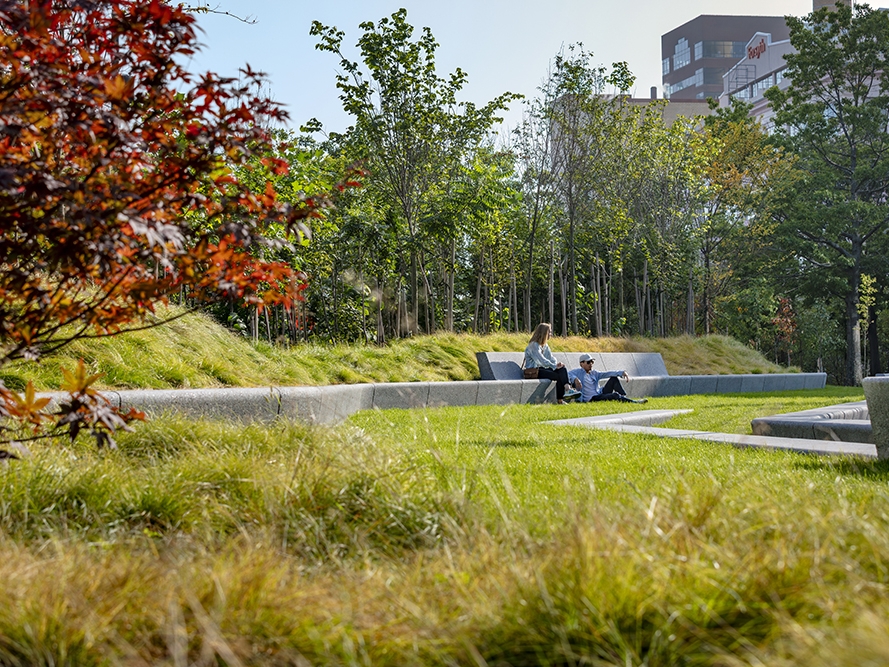





Creating forests at small or large scales on areas not forested in recent times can sequester carbon, bolster biodiversity, restore degraded ecosystems and watersheds, prevent erosion, and support vulnerable communities.
Afforestation prioritizes ecological integrity and community partnership to ensure long-term success and avoid negative consequences. Plant areas where trees are historically appropriate, ensuring new species complement existing flora and fauna, and plant diverse forests that mimic natural ecosystems (see the Miyawaki Method example).
Key considerations for afforestation:
- Avoid monocultures: Promote biodiversity by planting a variety of tree species, enhancing ecosystem resilience
- Engage Indigenous and local communities: Integrate their invaluable knowledge of traditional land management practices for culturally and ecologically sensitive approaches.
- Incorporate agroforestry techniques: Enhance agricultural lands by integrating trees through intercropping and windbreaks, boosting biodiversity and soil health.
- Maximize urban spaces: Transform underutilized areas in parks, abandoned lots, corners of yards, playgrounds, parking lots, and degraded land into miniature forests, providing benefits like increased carbon sequestration, enhanced biodiversity, and reduced urban heat.
Restore ecosystems and watersheds: Prioritize planting in areas in need of ecological restoration, to improve soil health, prevent erosion, and enhance water quality.